Earl Rush
CEO and founder of Stuckonsalsa
... No Links Defined ...
|
| CD review by ERICB |
 |
StuckOnSalsa Correspondent DJ Eric B
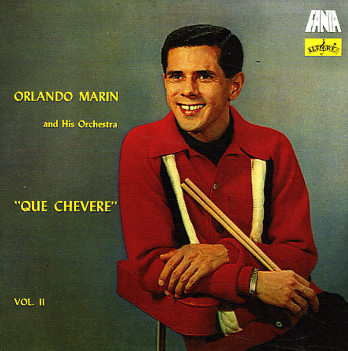
Orlando Marín - Que Chevere, Vol II
http://www.elwatusi.com/search/release.php?release_id=30278
Tracks:
01. Quien Llorara
02. Casera Ten Cuida'o
03. El Loco
04. Que Mujer
05. El Timbalero
06. Que Chévere
07. Rico Melao
08. Meche
09. Besitor de Caramelos
10. Tiene Saoco
11. Llegue
Here is the information for the Composers and arrangers that Orlando provided for each different track:
Side A
1. Quien Llorara (Guaguanco)
Composer - Joe Quijano
Arranger - Basilio Rivera
2. Casera Ten Cuida’o (Son Montuno)
Composer- Orlando Marin
Arranger - Hector Rivera
3. El Loco (Mambo)
Composer- “Tito J” Jimenez
Arranger- Basilio Rivera
4.Que Mujer (Son Montuno)
Composer - Orlando Marin
Arranger - Hector Rivera
5. El Timbalero (Mambo)
Composer - Orlando Marin
Arranger - Orlando Marin - Basilio Rivera
Side B
1. Que Chévere (Mambo)
Composer - Orlando Marin
Arranger - Orlando Marin - Basilio Rivera
2. Rico Melao (Cha-Cha-Cha)
Composer - Jorge Mazon
Arranger - Orlando Marin
3. Meche (Mambo)
Composer - Orlando Marin
Arranger - Paquito Pastor
4. Besitos De Caramelos (Mambo)
Composer - Orlando Marin
Arranger - Orlando Marin - Basilio Rivera
5. Tiene Saoco (Guaguanco)
Composer - Chivirico Davila
Arranger - Frank Colon
6. Llegue (Latin Jazz/Mambo)
Composer - Paquito Pastor
Arranger - Paquito Pastor
After recording these two highly successful albums for Alegre Records, Orlando was invited to record with the Alegre All-Stars, performing his famous timbale solo on the moster tune "Manteca".
Orlando then returned to Fiesta Records, for whom he recorded "Está en Algo" (He's Up To Something), which included the smash hit "Aprende a Querer". and then recorded a boogaloo album "Out of My Mind" for the Brunswick label.
Orlando continued to break new musical ground with the release of his Latin jazz album "Saxophobia" on the short-lived Mañana Records label (also run by Al Santiago).
On "Saxophobia" no use was made of trumpets, but instead featured a unequalled frontline of five saxophones, Charlie Palmieri played piano on half the album and Louie Ramírez wrote half the charts and also composed one track.
The recording was hailed as a Latin jazz success, however, NYC Latin music industry politics at the time restricted airplay and undermined its commercial success.
The original pressing of this album is also a highly sought after collector's album and goes for big bucks whenever it pops up on sites like Ebay.
Throughout his performing career Orlando has maintained his roots in New York City, where he has given back to the community as an employment counselor for community-based organizations, including the National Puerto Rican Forum, his extensive employment counseling experience has helped countless job seekers of all ages prepare for the world of work.
Believing that music belongs to everyone, Orlando has been spending an increasing proportion of his time bringing his music to those unable to come see him: hospital patients, inmates of correctional facilities, and nursing home residents throughout the New York area.
Although Orlando Marín has not recorded an album since the 1970s, his band continues performs regularly and pays homage to the Mambo Era.
In 1997, on behalf of Orlando’s friends and fellow musicians, renowned Latin music historiographer Max Salazar presented Orlando a plaque at New York’s prestigious club La Maganette in recognition of nearly five decades of uninterrupted contribution to Latin music.
Today the Orlando Marín Orchestra remains one of the most active Latin bands on the East Coast.
The Orchestra appears regularly at the Tito Puente Restaurant, at many popular New York dance venues and at open-air venues throughout the city, such as the South Street Seaport; Roberto Clemente State Park; Orchard Beach; the Ramon Velez Hunts Point Multi-Service Center; Riverbank Park; and the Battery Park Concerts.
In 2006, Congressman Jose E. Serrano, U.S. Representative for New York's 16th District, honored Orlando Marín as “The Last Mambo King,”
In closing I wish to extend my sincere appreciation to The Last Mambo King himself, for his kindness and willingness to help me in completing the information for this review/recommendation.
For me personally it was an encouragement when Orlando expressed his enthusiasm and eagerness to get this info as accurate and complete as possible and even got in touch with his former band members to see what they remembered about the recording sessions and the musicians that appeared on the album “Que Chevere”.
Orlando for me you are truly are a (Mambo) King in the sense that, instead of ruling up high from a Throne, is so kind to share with other people that he refers to as "Mi Familia", y por eso; Gracias desde el fondo de mi corazón.
For booking info for the Orlando Marín Orchestra, e-mail contact: lastmamboking@gmail.com
You can also find information on www.myspace.com/orlandomarinorchestra
Musicians:
Orlando Marin, Leader, Timbales, Vibes
Francisco “Paquito” Pastor, Piano
Lin Torres, Bass
Izzy Feliu, Bass
Nick Ramos, Conga
Louis “Chickie” Perez, Bongo
Tito "Tito J" Jiménez, Guiro
Alfredo “Chocolate” Armenteros, Trumpet
Basilio Rivera, Trumpet
“El Negro Vivar”, Trumpet
Jack Hitchcock, Trombone
Walter Gene Jefferson, Sax, Flute
Chivirico Dávila, Vocals
Cheo Feliciano, Vocals
Elliot Romero, Vocals
Willie Torres, Vocals
Santos Colon, Coro
Celio Gonzalez, Coro
Yayo El Indio, Coro
Orlando Marín is a band leader and timbales player and a contemporary of Tito Puente, Machito, Tito Rodríguez, and other New York mambo-era icons.
Marín was born of Puerto Rican descent in the Bronx, New York in 1935 and he has been a part of New York’s Latin music scene since his mid-teens.
At the time that the Mambo was exploding in the early 50s, Orlando was already captivated by its rhythms and he acquired a love of music and developed a keen interest in Latin percussion.
At age 16, while preparing for a career as a cartoon illustrator at New York’s prestigious High School of Industrial Arts, he formed a small band with Chikie Pérez (who later would play for years in Tito Puente's orchestra), Luis Goicochea, (who would play for many years with Tito Rodríguez), David Pérez, Larry Acevedo, Luis Robles and Clod Eve.
The band also had a 15-year-old Joe Quijano on vocals and 14-year-old Eddie Palmieri on piano, both of whom were destined to become Latin music greats in their own right.
The band quickly evolved into orchestra with 4 trumpets in the line up, and it was the first of the Bronx-born Latin dance ensembles to achieve solid commercial success, appearing in dance venues all over New York City .
By the age of eighteen, Marín was leading his own orchestra and playing dance venues like the Palladium Ballroom, the Tropicana, Stardust, and the Bronx’s renowned Hunts Point Palace.
At a time when competition was strong and the top Latin bandleaders all battled for the title “Mambo King,” Marín built a reputation for having one of the tightest dance bands in the city.
In 1954 Orlando recorded his first 78 with his first composition, "Mi Mambo" on the Plus label, produced by Richard Marín.
His first big record deal, however, came in 1956 with Fiesta Records, where he recorded two (shared) albums: "Arriba Cha-Cha-Cha"(with the Orchestras of Monchito, Orlando Marin and Ramon Marquez) and, and "Lets Go Latin" (with the Orchestras of Ramon Marquez, Orlando Marin & Chico Sesma).
In 1958 Orlando's musical career came to a hold when he was drafted to serve in Korea as part of the U.N. occupation forces in Korea's DMZ.
While in Korea, Orlando entered the All-Army Talent Competition, winning First Prize in the Pacific Command, after which a musical tour of Korea and Japan followed, ending with a trip to Washington, DC for the finals and a performance on The Ed Sullivan Show.
While being stationed in California, Orlando sat in for Tito Puente on timbales at the Hollywood Palladium.
Several years later, Orlando would appear with Tito again at the Hollywood Palladium, this time each leading his own orchestra, and dueling on timbales.
Following military service, Orlando returned to New York in 1960 and reorganized his orchestra with many of his previous members and began playing again in the Palladium Ballroom and and Hunts Point Palace, as well as in many other popular New York dance venues, such as the Limbo Lounge, the Bayside Manor and the Hotel Taft.
Orlando's Orchestra soon gained the attention of producer, arranger, composer and bandleader Al Santiago.
Santiago, who previously worked for his uncle, the musician Bartolo Alvarez, (who owned the famous Casa Latina Record Shop in East Harlem) was also the owner of the "CasAlegre '55" record store (then located on Prospect Avenue and Westchester in the Bronx).
In 1956 Al Santiago expanded his business when he went into partnership '56 with clothing businessman Ben Perlman and founded the Alegre records label.
Just as the "Blue Note" records label was for Jazz, the Alegre Records Label instantly became synonymous with the New York Latin music sound and was unrivaled until the Fania Records label was established.
Santiago produced 49 albums on Alegre and some of its recordings include Pacheco y su Charanga, Charanga at the Caravana (by Charlie Palmieri's Charanga 'La Duboney'), debut albums by Kako and Willie Rosario, and the first three recordings of Eddie Palmieri’s La Perfecta.
Santiago wanted Orlando to record for him but Orlando had no lead singer at the time as Víctor Velásquez had just left his orchestra to sing again with Charlie Palmieri's Band.
At the moment that Orlando walked in at CasAlegre to tell Al that he could not record an album yet, luck would have it that Rafael 'Chivirico' Dávila was present in the store as well.
Unlike the mega-music stores of today, CasAlegre and other neighborhoods music stores were gathering places for local and visiting musicians.
Chivirico had just come to New York after leaving the Pérez Prado Orchestra where he had substituted for Beny "el Barbaro del Ritmo" Moré, (who had quit and went back to Cuba to form his own band).
Santiago therefore hooked Orlando up with Chivirico and the cooperation between the two proved to be a magical one as they really hit it off together.
In 1961 Orlando and his Orchestra were regulars at the Alhambra club, the Triton after-hours club (where Johnny Pacheco improvised the “Bronx hop”, a step that became part of the short lived Pachanga dance fad) and the Caravana Club.
Just as the Palladium in mid-town Manhattan was known as the home of Mambo, the Bronx’s Caravana Club became known as the home of Pachanga.
That same year Alegre Records released the single “La Casa” by Orlando Marín and His Orchestra, one of the earliest Pachanga hits which quickly became a big hit in New York and abroad, particularly in Colombia, where Marín’s music was also very popular.
Soon after the success of his first Alegre single, Orlando Marín recorded his first album for Alegre Records, "Se Te Quemó la Casa" (1962), the title track being written after Chivirico had an actual death threatening fire in his apartment and his wife and son barely got out to safety.
In 1964, Orlando Marín and his Orchestra recorded a second album for Alegre, entitled "Que Chévere, Vol. II".
This album consists of a set of short, hard tracks; 7 tracks are under 3 minutes, 3 tracks are over 3 minutes and "Timbalero" is the only one that clocks in over 4 minutes, mainly thanks to a, minute and a half lasting, Wild Timbale solo by Olando Marin.
Four different Latin Rhythms are featured; Mambo, Guaguancó, Son Montuno and Cha Cha Cha, which really gives a good overview of the musical trend of the groundbreaking sounds of the New York Latin scenes.
Unfortunately, (and uncharacteristically for Alegre records), instead of crediting all the musicians the album cover jacket only names the four soneros; Willie Torres, Elliot Romero, Chivirico Dávila and Cheo Feliciano.
The reason for this was that several of the singers and musicians were "moonlighting" while recording this album; Willie Torres sang with the band of Jose Curbelo and Cheo Feliciano with the Joe Cuba Sextet, while 'Chivirico' Dávila sang lead vocals both with Orlando and with Kako y su Combo and Elliot Romero sang with Johnny Pacheco.
These four soneros were some of the best at that time and as they take turn as lead singers from track to track, it provides a lot of variety to the album as a whole and they were backed up by a great Coro made up by Santos Colon, Celia Gonzalez and Yayo El Indio, all of them also great soneros in their own right.
The names of the musicians that participated in the recordings, all undocumented until now, were given to me by Orlando Marín himself and are listed below, as well as a listing of the composers and arrangers for each song.
The six Mambo tracks on the album are Orlando Marín's signature style with a tight rock-solid rhythm section and impeccable instrumentation.
The title track "Que Chévere", with Willie Torres on vocals, has an incredible Swing with bangin cowbells and cascaras (shell of the Timbales) and cymbals work and great solo work by Walter Gene Jefferson on Flute and Jack Hitchcock on Trombone.
“El Loco” and “Besitor de Caramelos” both with Chivirico Davila as lead vocalist, and “El Timbalero” with Elliot Romero as lead vocalist,are are up tempo Mambos and Orlando gets to showcase his skills as a percussionist with Bangin' Timbale solos on the last two tracks.
Pastor's composition "Llegue", is an instrumental track with has a nice Latin Jazz feel to it and plenty of room for the Bass player, a great Trombone solo by Jack Hitchcock and Sax solo by Walter Gene Jefferson to top it all off.
"Meche" is the second instumental track (not counting the Chorus) in which he trumpet parts are replaced by vibes (played by Orlando!) and flute.
The track "Quien Llorara", a swingin Guaguancó with Elliot Romero as lead vocalist, has great percussion work and a Blazin' Brass section; I absolutely love the break in this song!
On the second killer Guaguancó" track "Tiene Saoco" Chivirico Dávila takes lead vocals.
Just like the word "Duende" describes a feeling or a flavor in Flameno music, the word "Saoco" is a slang word that you can come across quite often in Salsa music.
Whenever the musicians create that incredible swing or are outdoing themselves soloing (“Cooking the Salsa”) , or Soneros are on fire with their improvisations in the coro/pregón (call-and-response relationship between the lead vocal soloist), you'll hear others shouting terms like "Como", "Candela" of "Saoco", meaning something outstanding is taken place right there, and in this case "Saoco tiene ya, Saoco mi Timbal" is it used for Orlando’s Timbale skills and this tune "Tiene Saoco" for sure!
This Banging Son Montuno “Casera Ten Cuida'o” is the only track that has Cheo Feliciano as lead vocalist.
The track has a great strong groove but is unfortunately faded out right in the middle of the response of Sonero and Coro at a time way too short; at 2.30 it already begin to fade before ending 12 seconds later.
This is the kind of track that should at least have been doubled in time, especially taking into consideration that the intro of the Orchestra and the Coro already last well over a minute of the song, before Cheo jumps in.
Cheo’s signature voice glides effortlessly over the rhythm section in response to the coro and it really makes you want the song to last longer, and I can only imagine what an additional two or three minutes would have done to this incredible cooker!
On the second Son Montuno, entitled, “Que Mujer” Willie Torres is acting as lead vocalist and Paquito Pastor takes a brief, but smooth piano solo.
The only Cha-Cha-Cha track "Rico Melao" also has Willie Torres as lead vocalist, and it clearly shows the Jazz influence in Latin music by featuring something that is very common in Vocal Jazz; a scat-oriented vocal soloing.
For the ones that never heard about "scat" singing; it is vocal improvisation with wordless vocables, nonsense syllables or without words at all.
Scat singing gives singers the ability to sing improvised melodies and rhythms, to create the equivalent of an instrumental solo using their voice.
"Que Chévere, Vol. II" really stands out from the pack of what the New York scene had to offer in the 60's and the album is regarded by many Latin music aficionados as far ahead of its time, the original vinyl Black label pressing is now a highly sought after collector's item.
It has recently been re-mastered on re-issued on the Codigo label so I advise you to snatch up a copy of the CD, or to download from ElWatusi... I guarantee you won't be disappointed!
|
La Sonora Ponceña - Algo De Locura Cover 
Tracklist
Tracklist:
01. Acere Ko
02. Todo El Mundo Escucha
03. Cenizas
04. Ingrato Corazon
05. Yemaya
06. La Pobreza Y Yo
07. Oyue Mi Quinto
08. Nobleza
09. Pa' Los Ponceños
10. Chanflin
review
The Puerto Rican band La Sonora Ponceña was founded in 1954 by Don Enrique “Quique” Lucca Caraballo.
The band evolved from a group called the Conjunto Internacional (aka Orquesta Internacional), that had been formed by Lucca in 1944.
Lucca had been a great fan of the famous Cuban band called Sonora Matancera and their musical style that utilized a full percussion section and a horn section made up completely of trumpets.
Sonora Matancera started of as a septet group with a guitar, tres, bass, one trumpet and percussion, but in 1944 a piano and a 2nd trumpet was added to the line up, innovations attributed to Arsenio “El Ciego Marvilloso” Rodriguez in the early ’40’s.
La Sonora Matancera eventually evolved to use 4 trumpets, and that became the trademark
of any groups to be called “Sonora”.
Quique Lucca formed his band after this concept and also incorporated the name of his hometown of Ponce by naming the band ‘La Sonora Ponceña’.
Quique Lucca’s son, Enrique Arsenio Lucca Quiñonez was born on April 10, 1946, he is better known as Papo Lucca ("Papo" is Puerto Rican slang for "junior").
At a very early age Papo displayed an incredible musical talent and the age of six he already began studying various instruments and music theory at the Free School of Music and just a month after he enrolled in the school, he performed a classical piece on a local radio station.
Eventually Papo Lucca would become a multi-instrumentalist, knowledgeable in at least eleven different musical instruments, but he would be best known as a pianist and as Quique had already recognized a great potential in his son he had Papo take private lessons from the renowned Puerto Rican pianist Ramon Fernandez.
Papo would record his first piano solo at the age of twelve as a guest artist with his father's band as they were the backing band for popular bolero vocalists Felipe Rodriguez and Pedro Ortiz Davila (better known as Davilita) on the album Al Cómpas de las Sonoras.
Destined to join and make a major contribution to the Sonora Ponceña family Papo became a full-time member of the band in 1960 at the age of 14.
That same year La Sonora Poncena travelled to New York City to perform at the Manhattan Center and the Teatro Puerto Rico, where the band (and especially Papo) received rave reviews.
Around this time, Papo was exposed to jazz and he decided to continue his education at the Puerto Rico Conservatory of Music to emerge as an accomplished musician and arranger.
It was at this time that Papo broke away from the traditional Puerto Rican style where the piano functioned more as a steady rhythm instrument.
With a Jazzy approach Papo began to play in the more varied Cuban (Son) style piano, holding on to a single riffs much longer and his fluid jazzy piano riffs became his signature and the essential ingredient to the Sonora Ponceña sound.
In 1968 Papo inherited the group from his father and took over as musical director of the band (while Quique kept his hand in as director).
With his dynamic innovative piano playing Papo led La Sonora Ponceña to the forefront of Latin music.
During the early years, La Sonora Ponceña was known mostly for their guarachas and boleros, but under Papo the band took a new musical direction with a fusion of traditional Cuban sounds missed with jazz arrangements and modern style improvisations and at this time the band also expanded to use four trumpets in the horn section
Although he's remained committed to Sonora Ponceña, Papo has balanced his involvement with a variety of outside projects both as musician and producer.
In 1976, he replaced pianist Larry Harlow in the Fania All-Stars and continued to perform with the group until the mid-'90s.
Papo has also played and recorded with artists like Willie Colón, Celia Cruz, Johnny Pacheco, Bobby Valentín, Ismael Quintana, Gloria Estefan, Adalberto Santiago, Andy Montañez, Pablo Milanés, Rubén Blades, to name just a few.
Papo is considered one of the best Salsa pianists of the 70's through the millennium.
He ranks with another great pianist, the late Charlie Palmieri, as one of the best piano instrumentalists in Latin Jazz and Salsa.
In turn, La Sonora Ponceña has outlived most Puerto Rican bands and through the years has one of the most consistent producers of Salsa music (the band released over thirty albums).
The band has included some of the most talented musicians and has brought forward some of the best soneros, among them Luis Guillermo “Luigi” Texidor Ortiz, Humberto “Tito” Gómez, Miguel Ortiz, Tonito Ledee and Yolanda Rivera.
When Papo took over as musical director of the band the group inked out a deal with Inca Records and recorded its first album in 1968, entitled 'Hacheros Pa’ Un Palo', the title track becoming a great hit which put the group definitely on the Map of Salsa.
The following year (1969) the band recorded the album 'Fuego En El 23' and the title track from this album became an even bigger hit.
The third album entitled 'Algo de Locura' was released in 1971 and was produced by Larry Harlow, who was assigned to it by Jerry Masucci, co-founder (with Johnny Pacheco) of Fania Records who had just purchased the Inca Label.
Although the tracks really have kind of a nice Garage Sound to it you can really tell that the band members had been playing and rehearsing together, both the horn and rhythm section operate like well-oiled machines and the terrific soneros Luigi Texidor Ortiz and Tito Gómez are backed up by a coro made up by heavyweights Yayo el Indio and Adalberto Santiago.
Like almost any album that was released in the 70's "Algo de Locura" contains a wide variety of Latin rhythms.
The band kicks off the album with the track “Acere Ko,” a fast-paced Rumbon on which Luigui Texidor shows his Sonero skills over a barrage of percussion and a blazin horn section, also a big hit when the album was first released.
'Oye Mi Quinto' is a fast paced Descarga Guagauncó with lots of interaction between the percussion section and Soneros and Coro.
The track 'La Pobreza y Yo' is a nice paced Son-Montuno, and we also find one Merengue track entitled 'Chanflin'.
The real gems on the album are the Guaguanco's "Todo El Mundo Escucha", "Pa' Los Ponceños" and "Ingrato Corazon".
My personal favorite track is 'Ingrata Corazon' that is so very well arranged, with surprising breaks and turns throughout the whole song.
Back in the 70's it was almost standard to include Boleros in the repertoire (something very few contemporary Salsa bands cover or include in their releases), on this album we find two of them; ‘Cenizas’and 'Nobleza'.
The track “Yemayá” is another nice example of something that (although still common to find in contemporary Cuban Salsa and Timba), hardly is found in most mainstream Salsa songs that are released nowadays; the aspect of the African Heritage in Salsa music.
I figured it’d be nice to give a little background info on this subject: on the track you’ll hear the sonero and coro use the terms as Yemayá, Virgin de la Regla, etc
Yemayá is an Orisha (also spelled Orisa or Orixa), a spirit or deity that reflects one of the manifestations (a force of nature) of Olodumare (God) in the polytheistic Yoruba spiritual or religious system (a few other “well know” names of Osrishas are Eleggua, Oggún, Oshún, Changó, Oyá, Obatalá or Orula).
The Yoruba religion originated in southwestern Nigeria and through time it has found its way throughout the world and is now expressed in several varieties or spiritual lineages (a few examples; Winti in Surinam, Voodoo in Haiti and Santería (see below).
The core beliefs of The Yoruba religion involve the gods to help humans in their daily lives; often with the help of priests who can divine the past, present and future, individuals can appeal to the Orishas through prayers, rituals, divination, sacrifices, offerings of food, drumming and singing.
Often forced to conceal their religious traditions, the worshippers of the Orsihas cloaked their faith in Roman Catholic imagery, (for example Yemayá masquerades as the Virgin Mary).
In various parts of the Caribbean this melting became known as Santería also known as Regla de Ocha, La Regla Lucumi, or Lukumi) and the religion has spread out from there, so nowadays you can find many followers of Santaría in cities like New York City.
Since Afro-Latin music's inception, musicians who believe in these saints or were initiated in this religion have been playing to or singing about the Yoruba gods of the Santería religion.
Legends such as La Lupe, Tito Puente and Celia Cruz have been known to be linked to Santeria or have been involved in one way or another at some point in their lives and many of their songs are laced with references to Orishas, for example "Changó" by La Lupe or "Un Toque de Bembé" by Celia Cruz
In the Afro-Latin music catalog of many other artists you also can find referrals, chants or entire songs dedicated to the Orishas, some of the most well know examples are "El Hijo de Obatalá" by Ray Barretto and "Yemayá y Ochún" by Héctor Lavoe and (for those who are old enough to remember) when Desi Arnaz, as Ricky Ricardo, belted out ''Babalu'' on the ''I Love Lucy'' show, he was actually referring to the Orisha "Babalu-aye".
Sonora Poncena dedicated this song to Yemayá a mother goddess, the goddess of home, fertility, love and family.
Originally Yemayá was a river goddess of the Yoruba in Nigeria, far from the ocean but when her people were hoarded onto the slave ships, Yemayá went with them, thus becoming the Goddess of the Ocean.
Yemayá shares responsibility for the ocean with another Orisha; Okolun who rules the dark and turbulent depths of the ocean, Yemayá’s domain is the upper level, the part of the sea that the light strikes, where water evaporates to be carried to land by her daughter Oya (the wind) to make rain for the crops.
Yemayá's gentle waves rock the watery cradle of the abundant life forms of the sea and like water she represents both change and constancy--bringing forth life, protecting it, and changing it as is necessary.
And with that I’m out, nothing more then left to say; the remastered version of Algo de Locura has just been released on the Fania Codigo label so make sure you do get this Gem for your music collection!
|
Joe Cuba Sextet - Estamos Haciendo Algo Bien! We Must Be Doing Something Right!
Joe Cuba was born April 22, 1931 as "Gilberto Miguel Calderón" in New York City.
His parents moved from Puerto Rico to New York City in the late 1920s and settled in Spanish Harlem, the Latino community located in the north-eastern part of the borough of Manhattan (also known as El Barrio and East Harlem).
Gilberto was raised in an apartment building where his father had become the owner of a candy store that was located on the ground floor.
As Stickball was the main sport for young boys of the neighborhood, his father had organized a stickball club called the Devils and son Gilberto was a fanatic stickball player.
However, after Gilberto broke a leg playing stoop ball, he took up playing the conga, which he practiced in the house and on the block.
In 1950, at age 19 years Gilberto played in a group called La Alfarona X, where he replaced had Sabu Martinez, who had left to play with the Xavier Cugat Orchestra.
Gilberto also played with the Joe Panama Quintet, where Jimmy Sabater was the timbales player.
After recruiting vibraphonist Tommy Berrios, Gilberto and the band had a falling out with Panama and formed the Cha Cha Boys with Gilberto as the bandleader.
At one point Gilberto had his promoter, Catalino Rolón try to get them a gig in the Stardust Ballroom.
The band was booked indeed, but when the owner heard name Calderón, as leader of the band, he said “no one is going to want to come hear a band with a name like that”, and so his agent came up with the stage name "Joe Cuba" (I'll refer to Gilberto as Joe Cuba from this point on).
After the newly named Joe Cuba Sextet made their debut at the Stardust Ballroom, the unusual instrumentation featuring vibraphones that replaced the traditional brass sound, caught on and the Joe Cuba Sextet would frequently play in everything from the the ballrooms in El Barrio, in upscale Manhattan clubs and the upstate dance halls in the Catskills, where they would alternate stages with bands like Eddie Palmieri's La Perfecta.
Eddie's brother Charlie was musical director of the Joe Cuba Sextet before his untimely 1988 death from a heart attack.
The big break for Joe Cuba came in 1962 when the Sextet recorded "To be with You" on the Seeco Records Label.
For many people in the 60's, the merging American R&B styles of Motown with Afro-Cuban instrumentation with bilingual lyrics were the first musical introduction to Latin rhythms.
Because of the mixture of Spanish and English lyrics used Joe Cuba’s Sextet became especially popular in Latino communities all over the USA and particularly helped in shaping Nuyorican identity in New York City, where the children of Puerto Rican emigrants began to take music, culture, arts and politics into their own hands.
Along with fellow Nuyorican artists such as Ray Barretto and Richie Ray, Joe Cuba was one of the key architects behind the merging Latin Boogaloo sound, a mix of Afro-Caribbean genres blended with urban rhythm & blues which became a popular and influential Latin style in the United States from 1966-69.
Boogalu (aka bugalú or shing-a-ling) resonated particularly with African American audiences, and in fact was inspired by the interaction between African American dancers and Latin musicians, who developed this style of music in an effort to appeal to African American dancers who were not responding to their traditional Mambos and Cha Cha Cha’s.
"Estamos Haciendo Algo Bien! We Must Be Doing Something Right!", a classic Album from that 1965, has just been reissued
This was the fourth album on the Tico Record label for the band, the three previous ones being; "Vagabundeando/Hangin’ Out", "Alma del Barrio/The Soul of Spanish Harlem", and "Bailadores".
The Joe Cuba Sextet got their first crossover hit with the Latin and soul fusion of "El Pito (I Never Go Back To Georgia)", that appeared on "Estamos Haciendo Algo Bien! We Must Be Doing Something Right!" (The title of the album itself btw came from a popular ad jingle for Rheingold Beer).
The "Never Go Back To Georgia" chant on the track "El Pito" was taken from Dizzy Gillespie's (co-written by his Cuban collaborator, Chano Pozo) intro to the seminal Afro-Cuban tune, "Manteca", which was Gillespie’s declaration of refusing to return to Georgia due to the state’s infamous segregationist policies.
While Jimmy Sabater sang the lyrics over the recurring piano vamp, Joe Cuba had instructed his fellow band members to repeatedly yell the band’s sign off musical phrase (Así Se Goza) and to laugh, talk, clap and create a party atmosphere, the sound of whistles was later added.
When a DJ at WBLS radio in New York played "El Pito", it became an immediate hit.
During live performances, Joe would whip his audiences into frenzy by throwing whistles out to the crowd so that they could join in the fun.
Ironically, none of the band members had ever been in Georgia, but when the state of Georgia’s legislature complained about the song and called Joe Cuba demanding why he would record a song whose chorus negatively derided the still segregated Southern town, Joe Cuba replied, “Georgia is the name of my girl.”
"Estamos Haciendo Algo Bien! We Must Be Doing Something Right!" is a great sampler of what Latin music was like in the 60's, as the albums covers quite a few different styles of music including Pachanga, Mambo, Guaguancó and some boleros/baladas like "Incomparable" , "My Wonderful you (Baby when I'm down)” with it's english lyrics, and "Si te dicen", (made famous in the 1950s by Cuban singer Vicentico Valdés) on which Sabater and Feliciano shared a duet on record for the first time.
The tracks on this album also shows that this band's rhythm section was one of the tightest around at the time; "Pruebalo", "Y tu abuela donde Esta" and "Arecibo" are all what I personally refer to as signature Joe Cuba tunes, they start of in a nice tempo and suddenly turn into some wicked up-tempo tunes.
Another great upbeat track, a Mozambique, in which Joe Cuba gets to show off his conga skills, is the Hector Rivera composition "Ya no aguanto mas".
Although Hector Rivera is mentioned in the liner notes on the original album jacket back cover, Rivera unfortunately never got very much credit, while in reality he was an important arranger of Joe Cuba's sound and a major driving force behind the band.
The instrumental Tito Puente composition "Clave Mambo, which after all this time is still a big hit with the On2 dancers/aficionados, and the Guaguancó track "Bochinchosa" are two of my personal all time favorite tracks.... I've got just one word for it; Bangin'!... these tracks are worth the price of the entire Album by itself.
This is truly great Classic material, so snatch up a copy of this remastered CD while they last!
Joe Cuba had been inducted into the International Latin Music Hall of Fame in April 1999 and in 2004, he was named Grand Marshall of the Puerto Rican Day Parade celebrated in Yonkers, New York and was also the director of the Museum of La Salsa, located in Spanish Harlem, Manhattan, New York.
Joe Cuba died on February 15, 2009 in New York City, removed from life support after being hospitalized for a persistent bacterial infection.
Musicians:
Joe Cuba, percussion, Coro
Nick Jiménez, Piano, Coro
Jules “Slim” Cordero, Bass, Coro
Tommy Berrios, Vibes, Coro
Jimmy Sabater, lead vocals, Coro
Cheo Feliciano, lead vocals, Coro
Tracklist:
01. Pruebalo OK?
02. My Wonderful You (Baby When I'm Down)
03. Y Tu Abuela donde esta
04. Bochinchosa
05. Si Te Dicen
06. Ya no Aguanto mas
07. El Pito (I'll Never Go Back to Georgia)
08. Incomparable
09. Arecibo
10. Lo Bueno Ya Viene
11. Clave Mambo
|
Timbalive - From Miami a la Habana
Tracks:
Timba is an amazing, explosive, lively musical genre that draws heavily from international influences such as Jazz, Rock, Disco, Funk, Hip Hop and Cuban Rumba, Guaguancó and the sacred songs of santeria.
Although Timba is considered to be a form of popular music, the technical mastery of Timba is only possible through highly trained musicians, who have solid theoretical backgrounds in classical music, jazz and other international genres, as well as traditional Cuban folkloric music.
Timba has been very popular for quite some time in the Netherlands where I'm from, as well as in other parts of Europe, especially France and Spain both have vibrant Timba Salsa scenes.
Outside of Miami and a few other spots, Timba music is not overly popular in the USA in general (many salsa dancers consider it difficult to dance to and strong to their ears), but is beginning find a niche among a growing number of dancers.
Until quite recently many recordings by American Timba bands didn't really measure up to the Timba music that is being made in Cuba.
The last few years, however, a few new bands on the Miami latin scene, like N’taya, El Pikete, Sabor Habanero and Michel Calvo y Su Miami Power Band, began making waves.
A band with the name Timbalive burst onto Miami's music scene in august 2008.
Timbalive was created by Leo Garcia (drummer & director) and in a short period of time it became one of the hottest bands to light up Miami ’s night life and due to their spectacular live show it became favorite on the Latin music scene.
Timbalive's members are well trained musicians from different Cuban music schools, and some of them have played with some of the most well known artists like Issac Delgado, Manolin "El medico de la Salsa", Willy Chirino, Albita Rodriguez, Carlos Manuel, Luis Enrique, Paulo FG, to name just a few.
In May 2009, Timbalive hit the recording studio and the result, a CD entitled "From Miami a la Habana", was released in October 2009.
The Album was recorded in Miami with sophisticated production techniques and amazing arrangements under the musical production of trombonist/arranger Byron Ramos and the executive production of drummer/timbalero Leo Garcia.
For the recording the Timbalive members called upon the talents of many guest musicians from both Miami and Cuba, including four time Grammy Award Winner Gonzalito Rubalcaba, Amaury Gutiérrez, Issac Delgado, Manolin " El Medico de la Salsa ",
Br@ily, Ivan "Melon" Lewis, Robertico ‘Kiki”Garcia and Norberto Rodriguez, rapper "El Mola" and some of the heaviest hitters on the Timba scene like Mayito Rivera, Pedrito Calvo and Alex Abreu.
The tracks on "From Miami a la Habana" consist of 11 Timba tracks by composers like Juan Formell and Amaury Gutierrez, as well as some tracks of the own inspiration of Bayron Ramos, who also arranged some of the tracks.
This is the real Timba right here, the musicians are amazing and it’s It is musically excellent with the rhythm breaks and tempo changes, powerful coros, blazing horns and banging percussion.
From the very few beats of the opening track “Dame un Pin” you just know that this is going to be right, eso si tiene Tumbao!....I can almost visualize the Casineros in the Rueda circles go crazy with this kind of stuff, this is the kind of music that truly is made for dancing and that DJ's can use to keep the dance floor hopping.
The title track “De Miami a la Havana ” is a Soneros paradise; Issac Delgado, Manolin "El Medico de la Salsa ", Mayito Rivera, Pedrito Calvo, Br@ily and Alex Abreu all takes turns with their improvisations, backed by a great Coro “Lo que te traigo se llama musica Cubana, un poquito de Miami y otro poquito de la Havana” (what I bring you is called Cuban music, a little bit from Miami and a little bit more from Havana), Alex Abreau tops it off with a great Trumpet solo.
On “Un poquito pa despues” female vocalist Yezi Gonzalez gets to prove her skills as lead sonero and she lays down the works while rapper “El Mola” spits his lyrics over the beat before Robertico ‘Kiki’Garcia finishes the song with a nice Flugelhorn solo.
“Enredado en tu pelo” is a composition by Latin Grammy nominee Amauly Gutiérrez, who also is the guest singer for this track, which doesn’t really classify as Timba in my opinion, it’s more of a nice uptempo Salsa track.
(“Enredado en tu pelo” and "From Miami a la Habana" are also offered as bonus tracks versions by the Timbalive band members themselves).
“Ave Maria que Color” kicks of with a great Rumba, before it breaks into some high octane Timba and the Juan Formell composition “Chirrin Chirran” is given a make over as a homage the to Maestro Formell himself and it’s a worthy one that closes out with a wild solo by Norberto Rodriguez on electric Guitar, something you don’t hear often in salsa music.
Altough all tracks are really great, I personally really dig "El Dinero", “Zorra” and “Timba pa la Humanidad” the most.
I love the way tracks like "Zorra" and "Timba pa la libertad" take of with a banging monuno on piano after wich thethe percussion and horns blend in, a pumping bass, a powerful coro and the soneros piercing through it with their inspirations ... the changes in rhythm, and of course the breaks.... Cintura Mami, Cintura!!!
This is essential Musica Cubana baby!.... go get it...Ahi na ma!
Musicians:
Leo Garcia, Drums & Timbal
Bayron Ramos, Trombones & Teclados
Edward Magdariaga, Bass
Javier Concepcion, Piano
Boris Monterecy, Voz & Coros
Carlos Parra, Voz & Coros
Yesi Gonzalez, Voz & Coros
William Paredes, Trombones
Andres Padron, Conga
Conrado " Coky" Garcia, Congas, Bongo, Batas, D'jembe
Cajones & Quinto
Special guests:
Amaury Gutierrez, Voz (track 5)
Gonzalo Rubalcaba, (Keyboard solo track 2)
Isaac Delgado, Voz (track 2)
Manolin "El Medico de la Salsa", Voz (track 2)
Mayito Rivera, Voz (track 2)
Pedrito Calvo, Voz (track 2)
Br@ily, Voz (track 2)
Alex Abreu, Voz & Trumpet solo (track 2)
"El Mola" , Voz (track 4)
Ivan "Melon" Lewis, piano (track 2)
Roberto "K
Timbalive - From Miami a la Habana
Tracks:
01. Dame Un Tin
02. De Miami A La Habana
03. El Dinero
04. Un Poquito Pa Despues
05. Enredado En Tu Pelo
06. Ave Maria Que Calor
07. Chirrin Chirran
08. Zorra
09. Timba Pa La Humanidad
10. Enredado En Tu Pelo - Version Timbalive
11. De Miami A La Habana - Version Timbalive
Special guests:
Amaury Gutierrez, Voz (track 5)
Gonzalo Rubalcaba, (Keyboard solo track 2)
Isaac Delgado, Voz (track 2)
Manolin "El Medico de la Salsa", Voz (track 2)
Mayito Rivera, Voz (track 2)
Pedrito Calvo, Voz (track 2)
Br@ily, Voz (track 2)
Alex Abreu, Voz & Trumpet solo (track 2)
"El Mola" , Voz (track 4)
Ivan "Melon" Lewis, piano (track 2)
Roberto "Kiki" Garcia, Flugelhorn solo (track 4)
Livan Mesa, Piano (track 1)
Marcos Prado, Coro (all tracks)
|
DJ Chino is a well known international Salsa DJ who supports young talented Salsa bands from all over the planet
In 2007 DJ El Chino released a compilation CD, entitled DJ El Chino's Solar Latin Club, Vol. 1 with 15 salsa, funk, son, Latin jazz and timba tracks, including some previously unreleased tracks by some lesser known bands.
The latest compilation from DJ El Chino, entitled Los Dinosaurios - Salsa & Mambo Underground, Volumen 1 is a collection of 14 rare Old School Salsa, Son Montuno, Mambo and Guaguancó tracks, remastered by DJ Michael El Rumbero from Berlin.
The CD opens with the nice cooker 'Guaguancó Del Solar' from Bush Y Su Nuevo Sonido, taken from the B side of a 45 on the Epoca record label.
Hailing from Panama, Francisco “Bush” Buckley, and his bands (Nuevo Sonido and Los Magnificios) are considered to be one of the finest salsa bands to come out of Panama.
Bush conquered salsa dancers and music aficionados with a sound a hard-edged danceable big band funky salsa sound.
Very few artists from Panama became famous outside of Panama; the only ones were those that relocated to the US like Meñique, Azuquita and Ruben Blades.
Bush was an exception and became highly popular amongst salseros in New York City during the 1990s.
Ruben Blades, who also briefly sung with Bush (y sus Magnificos) in the late 60’s recorded a nice, more up-tempo, version of this song with Los Salvajes del Ritmo
Trumpet player Rafael Labasta was born in the Dominican Republic and moved to Panama where he became one of the leaders in the Salsa Dura music scene.
Labasta also recorded with artists like Willie Rosario, Tommy Olivencia, Oscar de León, Mario Ortiz, La Playa Sextet and Ricardo Ray, to name just a few.
“La Toalla” by Rafael Labasta y Su Orquesta is Labasta's version of a classic Tito Rodriguez track, which first appeared on one of Tito’s biggest albums ‘Tito Tito Tito’ which was released in 1964 and became an instant hit with the dancers.
Labasta’s version of “La Toalla” was taken from the album “Labasta llego!”, which is a highly sought after collector’s items (as are all Labasta’s albums)
Another artist from Panama that is represented here is the great Pianist Christopher "Toby" Muñoz, with the up-tempo track “Animate” that originally appeared on a 1976 album by Toby Muñoz y Su Orquesta with cantantes Daniel Bulgin and "Papa" Espinosa.
The youth in Venezuela in the 60’s and 70’s grew up listening to Mexican Rancheras, Cuban music, Boleros, traditional Merengue, and Colombian Vallenato.
The middle class and the rich people used to listen to rock, classical music, of jazz and looked down on Salsa music, to which they referred as fringe music from the outlying slums.
When the Fania Sound captured all the attention in the mid-1970s, however, Salsa music reached maximum popularity and ended these social separations.
From that point on Salsa was playing almost everywhere: in TV shows, parties & barbecues, in buses and on almost every street corner.
In fact Venezuela became one of the largest consumers of Salsa music per capita.
A few of the Venezuelan bands from that era are represented here on this compilation; Orquesta La Ampliacion with the track “Estas En Algo” from the self-titled album and the track “Son en Ambiente“ by Orquesta La Renovacion is taken of the album “Hacia un nuevo horizonte” .
The band La Combinacion 77 is featured here with the track “Babaila”.
“Babaila”, with its lyrics denouncing slavery, was written by Tite Curet Alonso, who developed a unique style of his own which is known as "salsa with a conscience".
Throughout his life Alonso composed over two thousand songs, often about social and romantic themes which told about the poor blacks and the hardships that they faced.
Another one of Alonso’s songs “Las Caras Linda (De Mi Gente Negra) “recorded by Ismael Rivera, is considered by many as a classic.
“Babaila” became very popular when it first appeared on the 1974 “El Conde”, which was the debut album as leader for Pete "El Conde" Rodriguez
Another really nice version of this song is to be found on the 2003 CD “Siguiendo la tradición” by Los Soneros del Barrio with my favorite sonero Frankie Vazquez.
David Cedeño is better known as “New Jersey's Pride” & “the Kid from Jersey”.
David and his band are mainly know for the concept of taking mainstream pop hit songs and re-arranging and recording them as salsa romantica dance tunes, such as “Live Without You”, “Sealed With A Kiss”, “Lady In Red”, to name just a few.
The track “Salsa Na' Ma”, however, is just straight up slammin’ Salsa Dura.
A remake of this track, with arrangements by Pablo "Chino" Nunez, appeared on David Cedeño’s CD "A new Return/Un Nuevo Regreso” that was released in 2007.
“Me Duele El Corazon” is one of the greatest Guaguancó’s ever by Nelson Feliciano y su Orquesta con Kito Velez, which features sonero Jose Padilla “Joe P”.
Trumpet player/Arranger Rogelio "Kito" Vélez had worked with Rafael Cortijo's Combo and El Gran Combo de Puerto Rico before forming his own band Kito Vélez Y Sus Estrellas.
After two recordings, Kito Vélez Y Sus Estrellas and Kito Vélez Y Sus Estrellas Vol. 2, Vélez teamed up with trumpet player Nelson Feliciano and together these bone players became know as the “Guanica Brass”.
Vélez wrote all the arrangements on the album “Nelson Feliciano/Canta: Junior Cordova” and arranged and played on “Nelson Feliciano Orch./Kito Vélez/Canta: Joe P.” from which the track “Me duele el Corazon” was taken.
Both these albums, as well as the Kito Vélez Y Sus Estrellas ones, are highly sought after collector’s items.
Washington y Sus Latinos hail from Bogota, Colombia; this band was extremely popular in the 80’s
The track “El Rey del Guaguanco”, with a really nice solo on electric organ and some great Timbale work, appeared on the album ‘Se Fueron Los Bravos”.
The instrumental track “El Diablito” by Contemporary jazz great Jack “Mr. Bongo” Costanzo, was taken from the album “Mr. Bongo has Brass”.
Jack Costanzo was the first bongo drummer to join a jazz orchestra when he became part of the Stan Kenton organization in 1947 and he is the one of who’s the most responsible for the growth of the bongo craze in Jazz.
Conguera Sonia López, the youngest daughter of the legendary Candelario López Salas "Papá Candito", was at one point married to arranger, trumpeter and pianist Bobby "El Duro" Quesada, who released a few really great classic Salsa Dura albums himself and who also worked as an arranger for the Fania All Stars.
After Sonia and Bobby split up, she went on to lead, by the way, her own popular group for several decades in Puerto Rico.
“Aprendelo Como Yo” was taken from the great album by Sonia Lopez y Su Tremendo Combo with Sonia as leader; it also features Bobby Quesada and has Siso Marrero on vocals.
A few other tracks from this album “La Llave de la Ciudad / La Rosa Oriental / Los Siete Refranes / Arrimate pa ca” are also to be found on the Bobby Quesada CD "Vuelve el Mafia del Guaguancó”, that was released in 2007 on the MaryLou label.
“Tremenda Bronca”, another great Guaguancó track was taken of the album by Danny Gonzalez y Su Orquesta Sensacional with Cantantes Papo (Guango) Lebron & Junior Diaz.
This album is, in my personal opinion, one of the greatest Salsa Dura albums ever.
Two other slammin’ tracks from this same album were also featured on the compilation CD’s “Lost Classics of Salsa” (“El Vago” on Vol. 1 and “Guardia” on Vol. 2).
I am personally a really big fan of the Salsa Dura sound that came from Peru.
The Peruvian musicians fearlessly combined and brilliantly executed outside influences and gave it their own twist with a local flavor, creating a sound that is quite a bit different than 60s and 70’s Latin on Fania, Inca or Tico.
A perfect example is given here with the track “Mi Salsa Llego” by Tito Chicoma, Salsa music aficionados will certainly be able to recognize "El Verdadero Son" by the great Javier Vazquez in this tune.
Another really nice little banger that comes form Peru is “Prende El Fogon” by Carlos Miranda y Su Latin Combo that appeared on the album “!La Salsa La Traigo YO!”.
For all you Salsa Dura Aficionados, Hard Core Dancers and DJ’s out there…. This is definitely the one to get while they last!
Various Artists - Los Dinosaurios - Salsa & Mambo Underground, Volumen 1
Tracks;
01. Guaguanco Del Solar - Bush Y Su Nuevo Sonido (Panama)
02. La Toalla - Rafael Labasta Y Su Orquesta (Republica Dominicana)
03. Babaila - La Combinacion 77 (Venezuela)
04. Son En Ambiente - Orquesta Renovacion (Venezuela)
05. Salsa Na Ma - David Cedeño & His Orchestra (USA)
06. Me Duele El Corazon - Nelson Feliciano (Puerto Rico)
07. Estas En Algo - Orquesta Ampliacion (Venezuela)
08. El Rey Del Guaguancó - Washington Y Sus Latinos (Colombia)
09. El Diablito - Jack Costanzo (USA)
10. Animate - Toby Muñoz Y Su Orquesta (Panama)
11. Aprendalo Como Yo - Sonia Lopez Y Su Tremendon Combo (Puerto Rico)
12. Tremenda Bronca - Danny Gonzalez Y Su Orquesta Sensacional (USA)
13. Mi Salsa Llego - Tito Chicoma (Peru)
14. Prende El Fogon - Carlos Miranda Y Su Latin Combo (Peru)
Various Artists - Los Dinosaurios - Salsa & Mambo Underground, Volumen 1
|
Julito – P’al Bailador
(CD Cover)
Track list:
01. Maribel
02. El Nazareno Y Yo
03. Cristal
04. Pa'l Bailador
05. Nuestro Ayer
06. Pa' Los Muchachos
07. Pensando En Ella
08. Por Ella
09. Traigo Salsa
10. Pa'l Bailador (Bonus Track)
According to Julito Fernandez Antillano himself, it all began an afternoon in 1979 at the house of his grandparents in los Frailes de Catia , Caracas, Venezuela.
His uncle Fidel had just bought Bongos and when Julito saw and heard his uncle play this instrument something magical happened
Although his uncle had just bought the instruments and could only play the basic martillo bongo patern, but Julito was fasinated and that very moment would mark him for live.
Sometime later Julito’s grandfather gave uncle Fidel a small piano as a present and Fidel began to practice with Sonera Poncena songs.
At the same time a few kids from the neighborhood formed a band called Grupo Fororo” and they invited Fidel to practice with them.
Grupo Fororo began to practice in grandfather’s house and Julito was blown away by what he witnessed, it was almost like a revelation to him why God had put him on this very earth.
Julito’s brothers, Kikín and Dennys also developed an interesting music, Dennys began to play bongo and timbales, and when uncle Fidel received yet another bigger Piano from his father the smaller piano winded up in the hands of Kikín, (this would also mark a mayor point in his live, today Kikín is a professional Pianist.)
Meanwhile uncle Fidel sensed Julito’s “fever” for music and interest in the bass guitar and taught him how to play some faster bass lines, so Julito would be able to play Salsa.
Julito would never look back, at age seventeen he already played profesionaly with Naty y su Orquesta and at age 19 he played in the band of Porfi Jimenez (Porfi gave Julito his baby Ampeg ’62 bass as a present, with this bass which Porfi made his debut back in the day), and Julito now calls it “the father of my children”).
Since then Julito has recorded with Oscar D`Leon, Magia Caribeña, Andy Montañez, Willie Gonzalez, Dimension Latina, Naty y su orq, Cano Estremera, Pedro Arroyo, Federico y su Combo, to name a just a few.
He also has performed with Eddie Santiago, Willie Gonzalez, Nino Segarra, Combo Antillano, Pedro Arroyo, Oscar D`Leon, Ismael Miranda, Cheo Feliciano, Junior Gonzalez, Van Lester, Roberto Blades, Jose Alberto El Canario and since 1996 he is the bass player with Los Adolescentes Orquesta de Porfi Baloa.
At the end of 2009 Julito released his debut as band leader, with the CD, entitled “Pa'l Bailador”, released on the Salsaneo label
On this project Julito called upon some his friends, trombonist David Gonzalez Jr., sax player Oswaldo Lezama, and the amazing pianist/bandleader Joel Uriola.
Uriola is one of the Venezuelan artists who has played for Oscar D'Leon, Orlando Poleo, Changuito, and Naty y Su Orquesta and now chooses to independently record and produce himself in order to put his music out at home and abroad and he was the one that encouraged Julito to do release this project.
There’s a little bit of everything to be found on “Pa'l Bailador”, Romantic salsa tracks like “Nuestro Ayer” with guest vocalist Rosa Monasterios, as well as latin music redone with Salsa arrangements like “Por Ella” , a Salsa cover of a romantic pop song by Andy & Lucas, (a popular Spanish Flamenco-inspired pop duo originally from the province of Cádiz in Spain), and the track “Christal” with guest musicians Richard Montilla on Mandolin, Jorge Glen on Cuatro and Oscar Arriaga as vocalist.
“Christal” is an homage to Simón Díaz, a multi-talented cultural Venezuelan figurehead, who’s adored by aficionados around the world, and is to Venezuelan Folklore what Celia Cruz is for the salsa world (relatively few people outside of South America are aware that the Gipsy Kings' hit Bamboleo was actually composed by Díaz).
The up tempo “Pa' Los Muchachos” with guest vocalist Rey Armas starts off with a reggeaton intro with a Rap by Angel Degado
The tracks that stand out on this CD are the Salsa Dura tracks “Maribel” , a (renamed) cover of “La Niche”, that appeared on the 1971 debut album, entitled ‘La Conspiración, by Ernie Agosto y La Conspiración, “El Nazareno Y Yo” with Angel Flores as vocalist, “Traigo Salsa” and the cover track "Pa'l Bailador", which is offered in two versions.
The Bonus Track version of "Pa'l Bailador" is a real Salsa club banger with nice breaks and great timbale work by Yomar “Caballo”Méndez.
With lyrics “Baila con orgullo, como se baila en Venezuela” (Dance with pride, like they dance in Venezuela), this one might just turn into a National Salsa Anthem.
The musicians that Julito brought together on this project turn it all into well oiled machine; the bouncing sound of Julito’s bass, is complemented by the montunos of the piano and the tight percussion section.
I personally really like the Sax work by Oswaldo Lezama that gives the sharp sounds of the brass section a nice deep swing and that reminds me of the signature sound of Willie "Mr. Afinque" Rosario
The singers are backed by a great coro made up by Rodrigo Mendoza, Wilmer Lozano and Cesar "Albondiga" Monges, making it all swinging contemporary Salsa.
Venezuela is definitely “En la Casa” with this one!
Musicians :
Julio Fernandez Antillano, Bass
Fidel Antillano, Piano
Joel Uriola, Piano
Jesús "Menudo" Moreno, Piano
Rafael Rey, Trompet
David González Jr., Trombone
Oswaldo Lezama, Tenor & Baritone Sax
Arnaldo "Patatin" Guacarán, Timbales, Congas
Elther "Kiko" González, Timbales
Yomar "Caballo" Mendez, Timbales
Romi Eliexer Dabuy, Congas
Luis Sulbaran, Congas
Everson Hernández, Maracas
Jorge Glen, Cuatro
Richard Montilla, Mandolin
Druber Salsazar, Vocals
Glen Vásquez, Vocals
Angel Flores, Oscar Arriaga, Rey Armas, Angel Degado, invited singers
Rodrigo Mendoza, Wilmer Lozano, Cesar "Albondiga" Monges, Coro
Julito – P’al Bailador
(CD Cover)
Track list:
01. Maribel
02. El Nazareno Y Yo
03. Cristal
04. Pa'l Bailador
05. Nuestro Ayer
06. Pa' Los Muchachos
07. Pensando En Ella
08. Por Ella
09. Traigo Salsa
10. Pa'l Bailador (Bonus Track)
According to Julito Fernandez Antillano himself, it all began an afternoon in 1979 at the house of his grandparents in los Frailes de Catia , Caracas, Venezuela.
His uncle Fidel had just bought Bongos and when Julito saw and heard his uncle play this instrument something magical happened
Although his uncle had just bought the instruments and could only play the basic martillo bongo patern, but Julito was fasinated and that very moment would mark him for live.
Sometime later Julito’s grandfather gave uncle Fidel a small piano as a present and Fidel began to practice with Sonera Poncena songs.
At the same time a few kids from the neighborhood formed a band called Grupo Fororo” and they invited Fidel to practice with them.
Grupo Fororo began to practice in grandfather’s house and Julito was blown away by what he witnessed, it was almost like a revelation to him why God had put him on this very earth.
Julito’s brothers, Kikín and Dennys also developed an interesting music, Dennys began to play bongo and timbales, and when uncle Fidel received yet another bigger Piano from his father the smaller piano winded up in the hands of Kikín, (this would also mark a mayor point in his live, today Kikín is a professional Pianist.)
Meanwhile uncle Fidel sensed Julito’s “fever” for music and interest in the bass guitar and taught him how to play some faster bass lines, so Julito would be able to play Salsa.
Julito would never look back, at age seventeen he already played profesionaly with Naty y su Orquesta and at age 19 he played in the band of Porfi Jimenez (Porfi gave Julito his baby Ampeg ’62 bass as a present, with this bass which Porfi made his debut back in the day), and Julito now calls it “the father of my children”).
Since then Julito has recorded with Oscar D`Leon, Magia Caribeña, Andy Montañez, Willie Gonzalez, Dimension Latina, Naty y su orq, Cano Estremera, Pedro Arroyo, Federico y su Combo, to name a just a few.
He also has performed with Eddie Santiago, Willie Gonzalez, Nino Segarra, Combo Antillano, Pedro Arroyo, Oscar D`Leon, Ismael Miranda, Cheo Feliciano, Junior Gonzalez, Van Lester, Roberto Blades, Jose Alberto El Canario and since 1996 he is the bass player with Los Adolescentes Orquesta de Porfi Baloa.
At the end of 2009 Julito released his debut as band leader, with the CD, entitled “Pa'l Bailador”, released on the Salsaneo label
On this project Julito called upon some his friends, trombonist David Gonzalez Jr., sax player Oswaldo Lezama, and the amazing pianist/bandleader Joel Uriola.
Uriola is one of the Venezuelan artists who has played for Oscar D'Leon, Orlando Poleo, Changuito, and Naty y Su Orquesta and now chooses to independently record and produce himself in order to put his music out at home and abroad and he was the one that encouraged Julito to do release this project.
There’s a little bit of everything to be found on “Pa'l Bailador”, Romantic salsa tracks like “Nuestro Ayer” with guest vocalist Rosa Monasterios, as well as latin music redone with Salsa arrangements like “Por Ella” , a Salsa cover of a romantic pop song by Andy & Lucas, (a popular Spanish Flamenco-inspired pop duo originally from the province of Cádiz in Spain), and the track “Christal” with guest musicians Richard Montilla on Mandolin, Jorge Glen on Cuatro and Oscar Arriaga as vocalist.
“Christal” is an homage to Simón Díaz, a multi-talented cultural Venezuelan figurehead, who’s adored by aficionados around the world, and is to Venezuelan Folklore what Celia Cruz is for the salsa world (relatively few people outside of South America are aware that the Gipsy Kings' hit Bamboleo was actually composed by Díaz).
The up tempo “Pa' Los Muchachos” with guest vocalist Rey Armas starts off with a reggeaton intro with a Rap by Angel Degado
The tracks that stand out on this CD are the Salsa Dura tracks “Maribel” , a (renamed) cover of “La Niche”, that appeared on the 1971 debut album, entitled ‘La Conspiración, by Ernie Agosto y La Conspiración, “El Nazareno Y Yo” with Angel Flores as vocalist, “Traigo Salsa” and the cover track "Pa'l Bailador", which is offered in two versions.
The Bonus Track version of "Pa'l Bailador" is a real Salsa club banger with nice breaks and great timbale work by Yomar “Caballo”Méndez.
With lyrics “Baila con orgullo, como se baila en Venezuela” (Dance with pride, like they dance in Venezuela), this one might just turn into a National Salsa Anthem.
The musicians that Julito brought together on this project turn it all into well oiled machine; the bouncing sound of Julito’s bass, is complemented by the montunos of the piano and the tight percussion section.
I personally really like the Sax work by Oswaldo Lezama that gives the sharp sounds of the brass section a nice deep swing and that reminds me of the signature sound of Willie "Mr. Afinque" Rosario
The singers are backed by a great coro made up by Rodrigo Mendoza, Wilmer Lozano and Cesar "Albondiga" Monges, making it all swinging contemporary Salsa.
Venezuela is definitely “En la Casa” with this one!
Musicians :
Julio Fernandez Antillano, Bass
Fidel Antillano, Piano
Joel Uriola, Piano
Jesús "Menudo" Moreno, Piano
Rafael Rey, Trompet
David González Jr., Trombone
Oswaldo Lezama, Tenor & Baritone Sax
Arnaldo "Patatin" Guacarán, Timbales, Congas
Elther "Kiko" González, Timbales
Yomar "Caballo" Mendez, Timbales
Romi Eliexer Dabuy, Congas
Luis Sulbaran, Congas
Everson Hernández, Maracas
Jorge Glen, Cuatro
Richard Montilla, Mandolin
Druber Salsazar, Vocals
Glen Vásquez, Vocals
Angel Flores, Oscar Arriaga, Rey Armas, Angel Degado, invited singers
Rodrigo Mendoza, Wilmer Lozano, Cesar "Albondiga" Monges, Coro
Julito – P’al Bailador
(CD Cover)
Track list:
01. Maribel
02. El Nazareno Y Yo
03. Cristal
04. Pa'l Bailador
05. Nuestro Ayer
06. Pa' Los Muchachos
07. Pensando En Ella
08. Por Ella
09. Traigo Salsa
10. Pa'l Bailador (Bonus Track)
According to Julito Fernandez Antillano himself, it all began an afternoon in 1979 at the house of his grandparents in los Frailes de Catia , Caracas, Venezuela.
His uncle Fidel had just bought Bongos and when Julito saw and heard his uncle play this instrument something magical happened
Although his uncle had just bought the instruments and could only play the basic martillo bongo patern, but Julito was fasinated and that very moment would mark him for live.
Sometime later Julito’s grandfather gave uncle Fidel a small piano as a present and Fidel began to practice with Sonera Poncena songs.
At the same time a few kids from the neighborhood formed a band called Grupo Fororo” and they invited Fidel to practice with them.
Grupo Fororo began to practice in grandfather’s house and Julito was blown away by what he witnessed, it was almost like a revelation to him why God had put him on this very earth.
Julito’s brothers, Kikín and Dennys also developed an interesting music, Dennys began to play bongo and timbales, and when uncle Fidel received yet another bigger Piano from his father the smaller piano winded up in the hands of Kikín, (this would also mark a mayor point in his live, today Kikín is a professional Pianist.)
Meanwhile uncle Fidel sensed Julito’s “fever” for music and interest in the bass guitar and taught him how to play some faster bass lines, so Julito would be able to play Salsa.
Julito would never look back, at age seventeen he already played profesionaly with Naty y su Orquesta and at age 19 he played in the band of Porfi Jimenez (Porfi gave Julito his baby Ampeg ’62 bass as a present, with this bass which Porfi made his debut back in the day), and Julito now calls it “the father of my children”).
Since then Julito has recorded with Oscar D`Leon, Magia Caribeña, Andy Montañez, Willie Gonzalez, Dimension Latina, Naty y su orq, Cano Estremera, Pedro Arroyo, Federico y su Combo, to name a just a few.
He also has performed with Eddie Santiago, Willie Gonzalez, Nino Segarra, Combo Antillano, Pedro Arroyo, Oscar D`Leon, Ismael Miranda, Cheo Feliciano, Junior Gonzalez, Van Lester, Roberto Blades, Jose Alberto El Canario and since 1996 he is the bass player with Los Adolescentes Orquesta de Porfi Baloa.
At the end of 2009 Julito released his debut as band leader, with the CD, entitled “Pa'l Bailador”, released on the Salsaneo label
On this project Julito called upon some his friends, trombonist David Gonzalez Jr., sax player Oswaldo Lezama, and the amazing pianist/bandleader Joel Uriola.
Uriola is one of the Venezuelan artists who has played for Oscar D'Leon, Orlando Poleo, Changuito, and Naty y Su Orquesta and now chooses to independently record and produce himself in order to put his music out at home and abroad and he was the one that encouraged Julito to do release this project.
There’s a little bit of everything to be found on “Pa'l Bailador”, Romantic salsa tracks like “Nuestro Ayer” with guest vocalist Rosa Monasterios, as well as latin music redone with Salsa arrangements like “Por Ella” , a Salsa cover of a romantic pop song by Andy & Lucas, (a popular Spanish Flamenco-inspired pop duo originally from the province of Cádiz in Spain), and the track “Christal” with guest musicians Richard Montilla on Mandolin, Jorge Glen on Cuatro and Oscar Arriaga as vocalist.
“Christal” is an homage to Simón Díaz, a multi-talented cultural Venezuelan figurehead, who’s adored by aficionados around the world, and is to Venezuelan Folklore what Celia Cruz is for the salsa world (relatively few people outside of South America are aware that the Gipsy Kings' hit Bamboleo was actually composed by Díaz).
The up tempo “Pa' Los Muchachos” with guest vocalist Rey Armas starts off with a reggeaton intro with a Rap by Angel Degado
The tracks that stand out on this CD are the Salsa Dura tracks “Maribel” , a (renamed) cover of “La Niche”, that appeared on the 1971 debut album, entitled ‘La Conspiración, by Ernie Agosto y La Conspiración, “El Nazareno Y Yo” with Angel Flores as vocalist, “Traigo Salsa” and the cover track "Pa'l Bailador", which is offered in two versions.
The Bonus Track version of "Pa'l Bailador" is a real Salsa club banger with nice breaks and great timbale work by Yomar “Caballo”Méndez.
With lyrics “Baila con orgullo, como se baila en Venezuela” (Dance with pride, like they dance in Venezuela), this one might just turn into a National Salsa Anthem.
The musicians that Julito brought together on this project turn it all into well oiled machine; the bouncing sound of Julito’s bass, is complemented by the montunos of the piano and the tight percussion section.
I personally really like the Sax work by Oswaldo Lezama that gives the sharp sounds of the brass section a nice deep swing and that reminds me of the signature sound of Willie "Mr. Afinque" Rosario
The singers are backed by a great coro made up by Rodrigo Mendoza, Wilmer Lozano and Cesar "Albondiga" Monges, making it all swinging contemporary Salsa.
Venezuela is definitely “En la Casa” with this one!
Musicians :
Julio Fernandez Antillano, Bass
Fidel Antillano, Piano
Joel Uriola, Piano
Jesús "Menudo" Moreno, Piano
Rafael Rey, Trompet
David González Jr., Trombone
Oswaldo Lezama, Tenor & Baritone Sax
Arnaldo "Patatin" Guacarán, Timbales, Congas
Elther "Kiko" González, Timbales
Yomar "Caballo" Mendez, Timbales
Romi Eliexer Dabuy, Congas
Luis Sulbaran, Congas
Everson Hernández, Maracas
Jorge Glen, Cuatro
Richard Montilla, Mandolin
Druber Salsazar, Vocals
Glen Vásquez, Vocals
Angel Flores, Oscar Arriaga, Rey Armas, Angel Degado, invited singers
Rodrigo Mendoza, Wilmer Lozano, Cesar "Albondiga" Monges, Coro
|
 |
|
 |
|
Review
|
|
|
|
|
|
|
|
In the early 1960's, George Rodriguez was a young school band musician from Spanish Harlem, playing the clarinet at student recitals in Carnegie Hall and listening to popular
American music, when he first heard live Latin music in a Bronx dance club.
A childhood friend introduced him to the tunes of popular west coast vibraphonist, Cal Tjader.
Rodriguez was blown away and immediately borrowed a xylophone and taught himself to play vibes.
Influenced by the likes of Johnny ColÛn, the LebrÛn Brothers, Willie ColÛn, Joe Bataan and Pete RodrÌguez, he started playing together with a few friends.
Together they created their own unique mix of Latin jazz, salsa, and pop music and named their band ëthe New Swing Sextetí.
New York City's Latin club scene was jumping at the time and it wasnít too long before the specific vibe sound of the sextet's got attention.
The New Swing Sextet band debuted at the 1965 World's Fair and soon after the band joined the Alpha Artists of America (under JosÈ Curbelo's management) and performed on TV shows,
including "El Club de la Juventud con Polito Vega," "The Tito Puente Show" (with host Sophie), and "El Show de Myrta Silva."
They played at the Corso, La Maganette, La Mancha, Colgate Gardens, Chez JosÈ, the Psycho Room, the Cheetah, the Tropicoro, Hunt's Point Palace, the Manhattan Center, St. George's Hotel
and the Riverside Plaza Hotel.
Before disbanding in 1979, the band recorded four albums, plus a separate album titled ëBest of the New Swing Sextetí on the Cotique label (a Fania Records sub-label).
Throughout the years, the New Swing Sextet's core members still have been performing LatÌn jazz under the name of ìMambo Negroî.
This ensemble's recent release is titled ëMidnight Mosaicí and dishes up ten spiced-up jazz standards, including "Round Midnight, Under My Skin, Nica's Dream, and Sugar.
The last couple of years internationally renowned deejay, Henry Knowles started spinning and sharing long forgotten New Swing Sextetís dance tunes on the local and international club scene
to rave reviews from the dance floor.
Knowles decided to track down New Swing Sextetís co-leader Angel Justiniano and encourage him to bring the New Swing Sextet back to life.
The band was revived with Angel Justiniano on vocals and Congas; his younger brother Harry on bass and vocals; Tomas Martin Lopez on bongos, timbales, misc. percussion and vocals; Hector Ortiz on timbales and bongos; Joe Mannozzi on piano; George Rodriguez on vibes and vocals and Jose "Cheo" Medina on lead vocals.
Knowles started booking them at clubs where the New Swing Sextet once again fired up the floors, recapturing infectious popularity and becoming a favorite among many dancers.
The New Swing Sextet finally started to gain global popularity and recognition and the idea for a new album came upÖ the result is here now; the long-awaited reunion CD of the New Swing Sextet, entitled;
"Back on the Streets--A Taste of Spanish Harlem Vol. 2" was recently released by Emusica Records.
The CD, a Henry Knowles Production, was co-produced by Willy Torres, a vocalist with the Spanish Harlem Orchestra.
Youíll find re-makes of classic tracks like; ëBuenas Noches ChechÈí (recorded by Machito and Tito RodrÌguez), ëBobo Eres T˙í (actually written previously by a former NSS bandmember, and arranged by NSS
But recorded by Orquesta Harlow) , Joe Cuba's ëEl RatÛní (incorporating street rap by Rodriguez' son, Alejandro), ëSarandongaí (recorded by Johnny Pacheco and mnany others), ëEl BalcÛn Aquel (recorded byí
Tito RodrÌguez), Tito Puente's ëAy, CariÒoí, and ëMonta Mi Caballitoí (recorded by Rafael Cortijo y Su Combo.)
Also featured are tracks like; ëThe Monsterí and ëEl BongÛí (both originally recorded by the group, and now rearranged); an original NSS instrumental titled ëFlightí, and ëEl Tiroteoí, a number
originally recorded by the group that is now performed with the addition of bat· drums.
The vibe-driven classic and original material by the New Swing Sextet infused with its own unique, intense brand of sizzling, hard-driving authentic New York swing will take you back to the Palladium area.
Itís smooth tempo-ed, not too fast, very danceable and club oriented... it sure is good to have the News Swing Sextet ìBack on the Streets!î.
|
| |
|
 |
|
 |
Musicians:


Angel Justiniano Congas, vocals


Harry Justiniano Bass, vocals


Tomas Martin Lopez Timbales, bongos, bata, vocals


Joseph Mannozzi, Jr. Piano


Jose "Cheo" Medina Lead vocals


Hector Ortiz Timbales and bongos


George Rodriguez Vibraphone and vocals


Joseph Mannozzi III Percussion


Willy Torres Percussion


Alejandro Rodriguez aka Mr. Bootz Wollinson Hip-hop verse, rap
un

                                             Tracklist:


                                       Buenas Noches ChechÈ


                                       Bobo Tu Te Quedaras


                                       El RatÛn


                                       Sarandonga


                                       En El BalcÛn


                                       The Monster


                                       Amor Jibaro


                                       Ay CariÒo


                                       El Bongo


                                       Flight


                                       El Tiroteo


                                       Monta Mi Caballito


e 2008


                                      (Cover Federico)


                               Federico Y Su Combo Latino


                     La Salsa De Oro - Cantan: Calaven, Joe, El Bobby


                                       Tracklist:


                                 01. Aunque No Tengo Dinero


                                 02. Campesina


                                 03. El Alacran


                                 04. No


                                 05. Que Dichoso Es


                                 06. Ha Llegado La Pachanga


                                 07. Yuca Y Boniato


                                 08. Oh Baby


                                 09. Dolores


                                 10. Con La Misma Moneda


                                 11. La Humanidad


                                 12. El Timbalito


                                 13. El Prestamista


                                 14. Mira Mis Labios


                                 15. Olvidate De Mi


                                 16. Si Te Fuiste Y Que


OK I can be nice and brief about this stuff right here; this is just essential


salsa history material,


so three words for ya: Get it now!


Although we can easily say that Salsa was invented in the streets of Spanish


Harlem, Salsa was just not a NYC


creation per se, many Latin American countries like Peru , Colombia , and


Venezuela had vibrant Latin scenes in


the 60s and 70s


The earliest salsa orchestras of Venezuela were very much influenced by the


music of Spain and Mexico , the aguinaldos


of Venezuela itself and the seis of Puerto Rico, but the musicians were also


very well aware of the new innovative sounds


that came out of New York from the  likes of Mon Rivera, Willie Colon, the


Palmieri brothers, Ray Barretto, to name just


a few.


The new Nuyorican creations in Latin music planted rebellious seeds into the


creative minds of the youth of Caracas who


in turn, began experimenting in fusing the local rhythms with the Salsa dura


sounds and threw their own raw spin on things,


creating a flourishing Venezuelan Salsa scene.


Despite being just as innovative, hard-hitting and unprecedented as Nuyorican


salsa, the music that came out Venezuela,


and many other South American countries, unfortunately, would be overshadowed by


what New York (especially Fania) was


putting out at that time and thus would remain relatively obscure.


Because of this, fans of Latin music, have missed out on some incredible South


American Salsa music for many years.


Among the pioneers of Venezuelan salsa : Olinto Medina, Oscar Simoza,  Ramon


Rivas and Federico Betancourt, better know


by the names of their bands; Sexteto Juventud, Oscar D'Leon, pianist Ray Perez


and his group Los Dementes and  the artist


that’s featured here; Federico y su Combo Latino.


Federico Betancourt was born in Valencia , Carabobo state, Venezuela , March 22,


1940.


In the 60s, he created his 'Combo Latino’ in which some of Venezuela’s finest


musicians and vocalist like Rogelia


"Canelita" Medina, Carlín Rodríguez, Dimas Pedroza, Enrique "Culebra" Iriarte,


José "Joe" Ruiz, Orlando Castillo "Watussi",


Wladimir Lozano y "El Negrito" Calavén” would participate and record


immortalized tracks like; ‘Pao Pao’, ‘Maina’ and


‘Cocolía’.


Nowadays it’s not unusual for collectors to pay really big bucks for a


particular original Federico vinyl depending on the


condition, rarity of the print, and whether it's an original issue with original


artwork and liner notes (for example the


1966 album of Federico entitled ‘Llegó La Salsa was one one of the earliest


using the term "Salsa" in its title and is a


highly priced collectable for that fact alone).


The compilation album entitled  ‘La Salsa de Oro’ by Federico y Su Combo Latino,


consists of sixteen tracks (a few tracks


coming from the highly collectable album  ‘Psicodelico Con Salsa’) with sizzling


salsa dura, pachanga and boogaloo that


Federico y su Combo Latino cut in the 60s/early 70s on the Gilmar label.


Some of my personal favorites on the Cd’s are ‘Con La Misma Moneda’ and  ‘Mira


Mis Labios’ with a really smoking brass


section and raw percussion that gives an almost garage feel that will just blow


your socks off.


Given that there are not a whole lot of original Federico LPs on CD (yet?), the


only way you are going to get to hear some


really smoking stuff form the Venezuelan Salsa scene, is try to get a hold of a


copy of compilations CD’s like this one


before they go out of print again, and...get ready to get your Dance Freak on!


                                         Musicians include:


                                      Federico Betancourt Guiro, director


                                      Alí Rojas Bongo y cencerro


                                      Roberto Monserrat Director musical,


timbales


                                      Pedro Medina Congas


                                      Alfredo Arcas Trombón


                                      César Pinto Trompeta


                                      Enrique Iriarte Piano


                                      Rafael Prado Bajo


                                      Calaven, Joe, El Bobby Cantantes
|
Musicians:
Marcelo Rosero: Vocal and Coro
Santiago Acevedo Casas: Contrabajo and Baby Bass
Sebastian Cabra Neira: Timbal
Miguel Ramon Rubiano: Tiple
Fernando Tejero Velez: Piano
Joaquin Arteaga: Bongo y Campana
Miguel Porras: Congas
Lenin Jimenez: Coros, Maracas y Guiro
Abel ìgitanoî: 1st Trompet
Sergio Contreras: 2ndTrompet
Nando Pico: Saxo Tenor
DarÌo GarcÌa: Trombones
Invited Musicians:
Marina ìLa Canillasî (Ojos de Brujo): Vocals (La bien paga)
Vicenc Solsona: Electric Guitar (Descarga Sucursal), Coro
Carlos Sarduy: Trompet (solos on Baila el Muerto and Escucha la llamada)
Denis Cuni: Trombone (solo on Baila el muerto)
Jose Armando Calderon: Coro
Rafa Segre: Flamenco Guitar (La bien paga).
Carlos ìEl Payo Yeyeî Zarazaga: Palmas (La bien paga).
This one's been flying under the radar for quite some time know and initionaly I was afraid that this album would remain in
relative obscurity, as it has been released on a small spanish music label, but very recently it also became available
on Descarga.com, so no doubt it will now find it's was to a wider international audience.
Therefore, one of my favorite European cities, Barcelona, Spain will no longer only be famous for it's Port, the shopping
area of Las Ramblas and the Architecture of Gaudi but also for a refreshing sound in Salsa Dura.
The Band La Sucursal S.A. was born in el Raval Barrio, an interesting and exciting area of the cultural epicenter of Barcelona,
El Raval is part of the second stage development of historic Barcelona and used to be very densely populated until
the city walls were removed around the turn of the 20th century and the Eixample area was built.
The Southern most part of the El Raval, near the port also used to be famous as the cityís red-light district.
However in 1988 the government started a huge urban regeneration project and invested a lot of money in cleaning up
the area and it has become more modern and safer, but still a darker and seedy side remains giving it a special personality
and character.
This multi-cultural neighbourhood is vibrant, historic, authentic and full of a huge variety of tempting cafes, restaurants
and bars and has also become fashionable being host to a wide variety of art studios, galleries and trendy bookshops.
It was here that, in the autumn of 2004, 4 young Colombian residents of el Raval brought together musicians from different
parts of North, South and central America and Europe and began developing their distinctive Salsa Dura sound.
The band was made up by a multicultural mix with musicians from Spain, Colombia, Chile, Argentinia,
Venezuela, England, Italy, France, Japan, Brazil, Cuba and Uruguay, who were all heavily influenced by the the New York
Salsa Dura sound of the 60's and 70's.
At first the Band's repertoire consisted mainly of covers but soon the band also began to develop it's own concepts and
matured as they started playing their own compositions.
The result was a creative fusion of a Salsa sound that reminds of the era of the non-commercial Salsa Dura sounds from the barrio
mixed with lyrics that reflect the experiences, opinions and lifestyle like urban poetry that is clearly rooted in the here and now.
As soon as the band began to perform frequenty on the Spanish salsa scene, the incredible high energy that the band radiated
along with the festive atmospere it created during it's performances began to be noticed, and it wasn't long before the band
was invited to do gigs in France, Portugal and Morroco where it began to receive the well deserved attention and respect on
an international level from music lovers, DJ's, critics and dancers alike.
Between november 2007 and february 2008 lA Sucursal S.A. began recording in the NÛmada 57 and S2 music studios in Barcelona,
and after being remastered in the Hit Makers Studio, the Album "Lo Nuestro" was released on the Nomada 57/La Trifulca label
in september of 2008.
There are really no fillers on this album that raises the bar for Salsa Dura and hopefully will set a new precedent.
With the exeption of "La bien Paga", all tracks on the album are own compositions.
Marina "La Canillas" (lead vocalist of Ojos de Brujo) was invited to provide the vocals on 'La bien Paga', with this song
La Sucursal S.A. wanted to pay homage to both to the Andalusian copla (music form), as well as to the Puertorican
band of mythical proporcions; La Sonora Poncena, who had also recorded the song on their 1968 album "Hacheros Pa' un Palo".
As La Sucursal S.A. is extremely popular in Colombia, two of the tracks of this album were used in movie soundtracks; ìLa 110î
was featured in the romantic comedy ìNi te cases, ni te embarquesî by director Ricardo Coral and ìLa Sangre y La Lluviaî
was used by the talented director Jorge Navas in the production with the same name which promises to be one of the best
Colombian productions of 2009.
My personal favorite tracks on this albums are the title track "Lo Nuesto", "Caigo", "Escucha la Llamada" and "No te puede querer",
(this track was also featured on DJ el Chino's compilation album Solar Latin Club Vol 1), and the bonus track "Antilla" which is
dedicated is one of the salsa club with this name located in Barcelona where the band performs on a regular base.
La Sucursal S.A. comes straight from Spain with a suitcase full of hard-core arrangements, so crank this one way up!
Great New Skool Salsa Dura to have in your collection and a salseros must-have.... nowadays it doesn't get any
better than this.
La Sucursal S.A.- Lo Nuestro: BCN Salsa Brava
Tracklist:
01. La Sombra
02. La Baila El Muerto
03. La 110
04. La Sangre Y La Lluvia
05. Caigo
06. Lo Nuestro
07. La Bien Paga
08. Descarga Sucursal
09. No Te Puedo Querer
10. Escucha La Llamada
11. Antilla (Bonus Track)
|
Tracklist:
01. Lo Que Traigo Es Salsa
02. Ven Baila Conmigo
03. I Still Love You
04. Gua Cha Rumba
05. Ahora Mismo
06. Tengo Que Conformarme
07. Cookin' The Mambo
08. Dime Quien Eres
09. Si El Mar Se Volviera Ron
10. Increible
11. Cannology
12. La Batidora Meneadora
13. Cuando Suenan Los Cueros
Musicians:
John Rodriguez Bongos, percussion
Jose Madera Timbales, percussion
Mitch Frohman Saxophone
Kevin Bryan Trumpet
John Walsh Trumpet
Pete Nater Trumpet
Richie Viruet Trumpet
Guido Gonzalez Trumpet
Driven by the dedication to keeping the sound of the Big 3 (Machito, Tito Rodriguez and Tito Puente) thriving and moving forward John Rodriguez, Jose Madera and Mitch Frohman, all former core members from the Tito Puente orchestra, decided to bring Tito Puente’s All Star Orchestra back together.
All three had a long association with the man know as ‘El Rey del Timbal’; Percussionist Jose ‘Pin’ Madera was the first arranger for the Machito Orchestra and would ultimately spent 31 years working with Tito Puente.
Madera also worked as a staff arranger with the legendary Fania record label from 1974 through 1983 and has recorded with Tito Rodriguez, Machito , Celia Cruz, Eddie Palmieri, Larry Harlow, Johnny Pachecoand Chico O’Farill, as well as with artists like Diana Ross, James Brown, Dizzy Gillespie to name a few.
Johnny ‘Dandy’ Rodriguez already started playing in the Tito Rodriguez Orchestra in his teenage years and played bongos in the Tito Puente Band for 27 years.
Rodriguez also recorded with artists like Ray Barretto, Charlie Palmieri, Celia Cruz and Johnny Pacheco.
Mitch Frohman spent 25 years playing the sax and flute solo’s with the Tito Puente Orchestra and Latin/Jazz Ensemble.
He recorded with Celia Cruz, Eddie Palmieri, Mongo Santamaria and many others and his recent works on many projects included performing with the Spanish Harlem Orchestra and leading the Bronx Horns and he’s featured as solo saxophonist on the opening score for HBO’s mega hit series ‘Sex in the City’.
Together with Stew Jackson, a professional musician that has appeared with a vast majority of the top stars of the music industry and acts as the director and CEO of the world famous Woody Herman Orchestra, they formed a Big Band Orchestra in 2001 and named it ‘The Latin Giants of Jazz’.
The Latin Giants of Jazz are led by percussionist Madera, who also serves as musical director of the orchestra, Frohman acts as the road manager, as well as being a saxophonist & flutist with the orchestra and Jackson serves as the director and CEO.
The debut album entitled 'The Latin Giants of Jazz Play the Music of the Palladium...Tito Lives’ was released in 2002.
The album featured several guest musicians and among them were Oscar Hernández, Dan Reagan, George Delgado, Raul Agraz, John Walsh, and the great vocalist Ray De La Paz, all members of Spanish Harlem Orchestra.
The album, which is dedicated to the musicians of the 40’s, 50’s and 60's Palladium era in general, and of course to Tito Puente in particular, received raving reviews and a great deal of airplay through out the world
The second album was released in 2007 is entitled 'Trip to Mamboland'.
Besides being a great album it is also would become a historic one, as it features the last recorded soprano saxophone solo of the Mario Rivera, who sadly passed away later that year.
Other guest musicians on this album are Sonny Bravo on piano, Raul Agraz and Pete Nater on trumpet, Sam Burtis and Reynaldo Jorge on Trombone , George Delgado on Conga, and Bobby Porcelli on Sax to name a few.
Ray de la Paz was replaced by one of my personal greatest soneros in the world, Frankie Vázquez,
Trip to Mamboland holds two of my personal all time favorite tracks 'Chao Chao' and 'Mientras Yo Viva' that never fail to get some heavy spinning rotation in my gigs.
With their third release, entitled ¡Ven Baila Conmigo! (Come dance with Me!), which was released in the beginning of 2009, the Latin Giants proved once again that the big band mambo is alive and well.
With exceptional authenticity the orchestra successfully keeps the original Big Band sound from the Palladium Ballroom heyday in New York City intact once again.
The concept of bringing in a a wide array of guest musicians seems to be really working for these guys; heavy hitters like pianist Sonny Bravo, conguero George Delgado, timbalero Jose Madera, trumpeters Pete Nater and John Walsh, trombonists Lewis Kahn and Reynaldo Jorge and many others are brought to the stage.
Frankie Vazquez is again featured as lead vocalist and he’s sure to rely on an outstanding back-up coro made up of Marco Bermudez, George Maldonado, Willie Martinez and Cita Rodriguez, daughter of legendary singer Pete "El Conde" Rodriguez,
Just like on the two previous albums (all three are released on the on Gigante Records label) the Latin Giants do not limit themselves to just Mambo, they play a wide variety of styles; Mambo-Jazz, Cha Cha Cha, Son, Guajira,Guaguanco and work with new Afro-Cuban and Latin American musical concepts and compositions.
The Salsa tracks on ¡Ven Baila Conmigo!; 'Lo Que Traigo Es Salsa', 'Ven Baila Conmigo', 'Tengo Que Conformarme','Dime Quien Eres','Si El Mar Se Volviera Ron', 'Increible' and 'La Batidora Meneadora' are all put it in the context of a mambo big bandwith blazing brass section and driving percussion and Vazquez get’s to prove why, after all these years, he’s still one of the best Soneros around today.
On 'Gua Cha Rumba' the rhytym section smoothly moves back on forth between cha cha cha and rumba rhythms while Vazquez lays down the works with his improvisations and on the track 'I Still Love You' Vazquez maneuvers the English lyrics with great skill.
Cita Rodriguez get’s a chance to prove her lead vocal skills on the track 'Ahora Mismo' and she really does a fine job.
The instrumental jazz mambos 'Cookin' The Mambo' & 'Cannology' really show the impressive caliber and talent of the musicians,bringing the top-notch soloists into the spotlight and on he closing track 'Cuando Suenan Los Cueros' Timbalero Madera, Bongocero
Rodriguez and Conguero Delgado take turns showing what Latin Legends are really made of.
The Orchestra has a tremendous energy and drive and an incredible swing which really makes it fantastic listening material, however,at the same time the music doesn’t really allow you to sit still, it’s all great dance material so it jsut makes you want to get up and echar un pie.
The Latin Giants of Jazz have been called ‘One of the most exciting, colorful and authentic orchestras currently on the music scene today’ and there’s nothing really that I can add to that because that’s just exactly what they are!
Make sure you get this one in your collection!
|
Willy Torres
Lo Que Traigo Yo - Willy's NYC Salsa Project
Tracklist;
1. A Las Seis
2. Rompe Saraguey
3. Baila Con Sabor
4. Fajardeno Pa Mi Tierra
5. Yambeque
6. Lo Que Traigo Yo
7. Si te Preguntan
8. La Muerte
9. El Ultimo Dia de Abril
10. The Fireman
Musicians:
Willy Torres Conga, bata, lead vocal
Bobby Allende Timbal kit and vocals
Nelson Torres Baby bass
Desmar Guevara Piano
Jorge Castro Bariton sax and flute
Ron Prokopez Trombone and vocals
Special invited Guests:
Herman Olivera Vocal
Pete Nater Trumpet
Efrain Davila Piano
Nelson Negron Back up vocals
Anthony Alvarez Back up vocals
Carlitos Soto Bongo & quinto
Emanel Bizeau Bata
Nelson Agron Guitar and cuatros
Chris Amelar Guitars
Lo Que Traigo Yo - Willy's NYC Salsa Project was released in the summer of 2008 on the Latin Street Music label.
Torres called upon a bunch of talented musicians to take part as guest musicians in this project and also featured is veteran sonero
Herman Olivera as guest vocalist.
Like any almost any contemporary Salsa album it has a few cover versions of classic Salsa tracks; the opening track is the Pachanga
A Las Seis, a Jimmy Sabater composition, which was a big hit for the Joe Cuba Sextet and continues with the cha-cha track Rompe Saraguey,
originally produced by Hector Lavoe.
Tito Puente's Yambeque and El Gran Combo's La Muerte also get a make-over and then thereís 6 original scores consisting of 3 Salsa tracks
and a Fajardeno; Fajardeno Pa Mi Tierra, all written by Willy Torres, a balada El Ultimo Dia de Abril written by Carlos Cascante and
finishes with the blazin latin jazz track Fireman, composed and arranged by Jorge Castro.
The cover versions are done with finesse and all tracks Salsa tracks have a rich, full sound which makes the album a solid listening
experience and are guaranteed to keep the dancers on the floor.
Willy Torres was born on December 31, 1975 in Trujillo Alto, Puerto Rico.
He grew up in a musical household on his grandfatherís farm, where he was exposed to Campesino or Jibaro music of Puerto
Rico at a very early age.
Both his parents were professional musicians, his father, renowned percussionist William Maisonet (aka Papo Conga)
performed with Merengue icons Wilfrido Vargas and Freddy Kenton and his mother Doris, sang with local trios, and even
recorded a few Boleros with an independent label.
Willy himself began singing at the age of four and playing Congas at the age of seven.
When his parentís family relocated to New York City in the mid 80ís, Willy began playing alto sax in high school concerts
and jazz bands and performed at many neighborhood events with Los Hermanos Torres, an ensemble that was led by his uncle,
bassist Nelson Torres.
At the age of sixteen Willyís vocal talents were noticed by Larry Harlow, of Fania All-stars fame, who invited him to join
his Latin Legends Orchestra to share the stage with the likes Adalberto Santiago, Ray Barreto, Yomo Toro, Junior Gonzalez
and Salvador Cuevas to name just a few.
When time permitted Willy also sang with Johnny (Zamot) Rayís Salsa Con Clase and Conjunto Imagen with whom he also
occasionally played piano.
In 1993 Willy temporary relocated back to Puerto Rico when was invited to join the orchestra of Sony recording artist
Victor Manuelle as back-up singer.
Besides extensively touring with Manuel he also began performing with Rey Ruiz, and occasionally Carlos Ponce.
In the winter of 1998 Willy decided to return to New York and became the musical director for Joe King, and Rey Ruiz.
He also began performing again with the Latin Legends and his professionalism and knack for creating vocal arrangements on
the spot, made him a regular on the New York Latin session scene.
Willy has been singing backup for Rey Ruiz, Tito Nieves, Johnny Rivera, Gilberto Santa Rosa, Ruben Blades, Michael Stuart
to name just a few of a list of artists that seems to be endless.
In 2003, pianist/arranger/producer Oscar Hernandez, who had long been aware of his talent and versatility, called Willy to
substitute on a few concert dates with the Spanish Harlem Orchestra, and impressed by Willyís vocals and command of the
stage, Oscar asked Willy to join the group permanently.
On the Spanish Harlem Orchestraís 2nd release (Across 110th Street ) Willy shared the lead vocal with Marcos Bermudez and
Ray De La Paz, as well as with the legendary Ruben Blades and on the 3rd release (United We Swing) with Paul Simon.
Although Willy continued touring and recording with the Spanish Harlem Orchestra, he also continued to be very active not
just as a vocalist, but also an arranger and producer.
In 2004 Willy released his first instructional video distributed by Hal Leonard Publications -Singing Salsa with Willy
Torres- , and co-produced the instructional video -Modern Conga Techniques- featuring world-renowned percussionist Roberto
Quintero in 2005.
In 2007 Torres released another video with Oscar Hernandez called -Salsa Piano- and that same year Willy's creation the
NYC Salsa Project was born.
Co-produced by DJ Henry Knowles, Willy Torres pulled together some top talents to form a six piece band with the sound and
elegant sophistication of a big orchestra.
Willy's NYC Salsa is compared by many to be a smaller version of the Spanish Harlem Orchestra with the creativity of Seis
Del Solar but a very unique sound when it pertains to Salsa, Latin Jazz and Traditional Fajardenos.
The NYC Project consists of Torres himself, who acts as the Composer, Arranger, Musical Director, Percussionist and Vocalist
Also on percussion and vocals is Willyís mentor and one of best musicians in latin music, Robert "Bobby" Allende, whoís also
part of the Spanish Harlem Orchestra.
On Bass is Willyís uncle Nelson Torres and on Baritone Sax/Flute and Tenor Sax is Jorge Castro, both of them also act as composers
and arrangers for the band.
On the Piano Desmar Guevara is featured and he also arranges for the band and last but not least is the young multi-talented
Ron Prokopez on Trombone and vocal, who also plays with the truly amazing contemporary Salsa Dura band La Excelencia and his
own The Element Band.
|
|
Oh man, being a big fan of Old Skool Salsa from Peru , I just absolutely love this stuff by this band by the name of
ëSalsa and Controlí, that just made it on the top of my list.
The CD is released by the Descabellado records and hopefully it will not be flying under the radar from being under
such a small label, 'cause this is the real thing right here!
This is hard, unpretentious, in-your-face Salsa Dura by a tough working band that brings back memories for those who
witnessed up close and personal Salsa Explosion of the 1970's in New York City and Puerto Rico, when bands like this
used to be everywhere in barrios all over in Latin America.
Nowadays bands like ëSabor y Controlí are rare to find, but they really need to be heard so that everybody can hear what
contemporary Salsa Dura is all about.
This is Salsa Dura straight from the street with cranked up, hard driving percussion by the bongocero and conguero that
play their cueros (skins) almost if they were lead instruments.
Itís really heavy on the brass, reminiscent of early Willie Colon, with hot, snarling aggressive trombones that are anchored
by the deep swing of the Tenor Saxophone giving it a very distinctive sound.
And all on top of this incredible rhythm are the vocals by the sonero and coro that are loud, at times almost distortedly
spraying lyrics straight from the barrio.
This Peruvian outfit is headed by Bruno Macher, who at age 14 wanted to play the trumpet but never quite managed to scrape
the funds together to buy one.
Two years later when he finally had saved enough to buy his first instrument it wasnít a trumpet however, instead he bought a
Tenor Saxophone.
Marcher started playing Latin-Jazz and Salsa and drew his inspiration from Orchestras and bands of the 70's like Impacto
Crea, Orquesta Zodiac Orchestra, Eddie Palmieri y la Perfecta, Willie Colon & Hector Lavoe.
Tired of the Salsa Monga sound, Marcher set his mind on forming a band with an a different, non-commercial sound that was
raw and urban, reminiscent of the very flavor from the 70's.
In 2000 he formed ëSalsa y Controlí, with members Ricardo Lopez on bass Constantino ¡lvarez on Timbales and Chebo Ballumbrosio
on Congas and Fernando Flores on Trombone
The band started out playing mostly ëDescargaí tracks with plenty of room for improvisation, but little by little shifted to
more traditional Salsa and in doing so they grabbed the attention of young salseros by creating songs that were both danceble
and contained meaningful lyrics that described everyday situations of urban life.
Macher and the band were eager to set a precedent by recording simultaneously instead of separate sessions, and in doing so
captioning the old feel that is found on many recordings from back in the day.
In 2007 the band released itís first CD, entitled ëEl Guapo Soy Yoí, a testament to the original flavor from the 70's with
a Peruvian twist.
With this first production of eight up-tempo, hard salsa tracks with powerful arrangements, aggressive trombones and the
percussion on the foreground ëSalsa y Controlí became an overnight hit on the Peruvian and Colombian Salsa Scene, where the
absolutely slamming track 'El Bravo' occupied first place on the charts for a long time.
The follow up to 2007's 'El Guapo Soy Yo' has just been released, yet another solid album entitled;ëCuchillo en los Ojos
ñ Salsa Brutalí,and the name really says it all!
The 8 tracks on this album are well crafted compositions by Macher, who also arranged all tracks together with Timbalero
Constantino Alvarez.
The sophomore album once again has a very urban garage sound the percussion up front and free-flowing horns.
Salsa y Control's aggressive Trombone sound is even more fortified by adding two more bones then on their debut album.
Macher once again provides lead vocals, except on tracks 4 and 7 where Raul Barreto, brother of recognized sonero July
Barreto, is featured as guest lead vocalist.
Cuchillo en los Ojos has an energetic uptempo feel throughout, right from the very beginning through to the end.
The album kicks off with the tracks 'El Justiciero' which sets the pace with the signature heavy 'in your face' trombone work
and banging cowbells and none of the following tracks let-up in any way.
Pianist Pedro Flores lays down some steady montunos and on tracks 'Estas Huyendo' and 'La Calle esta Sabrosa' he get's his
time to shine with solo work that reminds me of Eddie Palmieri.
Marcher himself really rips away on Sax in a Bobby Rodriguez style on 'Siempre Hacia Delante' and the title track 'Cuchillo
en los Ojos', brace yourself for that one!
Guest vocalist Raul Barretto proves his Sonero skills on 'La muerte quiere Bailar' and 'La calle esta Sabrosa', which also
has a jammin' Bongo solo by Julio Galarza.
On 'Camina Palomilla' guest Ivan Vilcachagua lays down some funky alto saxophone work, providing the perfect montuno for
some amazing percussion solos by conguero Chebo Ballumbrosio and timbalero Constantino Alvarez.
Don't let this album (as well as their first one 'El guapo soy yo') slip you by !!!!
|
|
Tracks:
1. El Justiciero
2. Estas Huyendo
3. Siempre Hacia Adelante
4. La Muerte Quiere Bailar
5. Mira Bien
6. Camina Palomilla
7. La Calle Esta Sabrosa
8. Cuchillo En Los Ojos
Musicians:
Bruno Macher: leader, Tenor Sax & Vocals
Constantino Alvarez: Timbales & Coro
Julio Galarza: Bongo, Campana & Coro
Chebo Ballumbrosio: Congas
Pedro Flores: Piano
Ricardo LÛpez: Bass
Jaime Chunga, Juan Garcia y Jeymy Campos: Trombones
Ivan Vilcachagua: Alto Sax on 'Camina Palomilla'
Raul Barreto: Guest Vocals on 'La Muerte Quiere Bailar' & 'La Calle esta Sabrosa'
|
|
| |